Grid-Down Comms: Staying in Touch When the Cell Towers Go Quiet
Your phone works great right up until it doesn’t. Here’s a plain-English look at Starlink, satellite messengers like the Garmin inReach, ham radio, and push-to-talk radios, and what each one really does when the grid goes down.
I’ve been getting a lot of emails lately with the same question: “Keith, if the power goes out for a long time and the cell towers go down, how do I stay in touch with my family?”
It’s a great question, and it’s one a lot of people don’t think about until they’re staring at a phone that says “No Service.” So let’s walk through it. This article is a starting point. I’m working on an in-depth episode on grid-down communications soon, and we’ll dig a lot deeper there.
Why the cell network doesn’t last
Most people assume that if their phone is charged, they can make a call. But your phone is only one piece of the puzzle. It needs a working cell tower, and that tower needs power and a connection back to the rest of the network.
Many towers have battery or generator backup, but that backup is built to ride out a short outage, not a long one. Once the batteries drain or the generator runs out of fuel, the tower goes quiet. Even before that, the network often gets overloaded, because everyone in the area is trying to call and text at the same time.
So the honest answer is this: in a short outage, your cell phone will probably still work, at least partly. In a long one, you should plan as if it won’t.
Starlink: internet from the sky
Starlink is satellite internet. A small dish talks to satellites overhead instead of to a cell tower or a cable in the ground. If your local towers and lines are down but the satellite network is still running, Starlink can keep you connected to the internet, which means email, messaging apps, internet calling, and news.
The big thing to understand is power. The dish and router need steady electricity, so in a grid-down situation you’ll need a battery bank, a solar setup, or a generator to keep it running. It also needs a clear view of the sky, and it comes with a monthly subscription.
Starlink is a strong option if you want to keep full internet access and you already have a plan for backup power. It’s less helpful if your power plan is a handful of AA batteries.
Garmin inReach Messenger: texting by satellite
The Garmin inReach Messenger is a small, pocket-sized device that sends and receives text messages over satellite. No cell towers needed. It pairs with your phone so you can type on a normal keyboard, but it can also send messages on its own.
What I like about it for preparedness:
- It works pretty much anywhere you can see the sky, with no cell coverage required.
- The battery lasts a long time compared to a phone, and it can be recharged from a small power bank or solar panel.
- It has an SOS button that connects you to a 24/7 emergency response center.
- It’s simple. If you can send a text, you can use it.
The trade-offs: it requires a subscription plan, messages can take a little longer to go through than a normal text, and it’s built for short messages, not phone calls or browsing. But for “We’re okay, staying put, meet at Grandma’s on Saturday,” it does exactly what you need. For a lot of families, this is the most practical first step.
Ham radio: powerful, but a bigger commitment
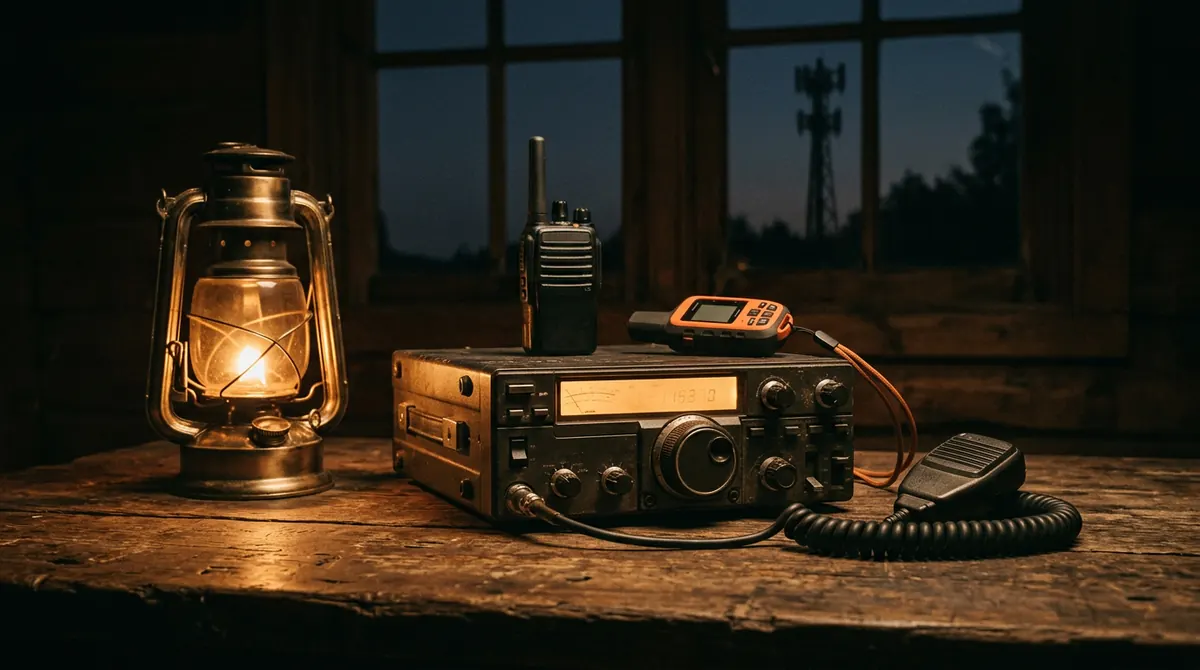
Amateur, or ham, radio is the gold standard for long-range, independent communication. Ham operators can talk across town, across the country, and around the world without any cell towers or internet. In a lot of past disasters, ham operators were the ones passing messages when nothing else worked.
I’ll mention it briefly here because it deserves its own conversation, and it isn’t for everyone. You need an FCC license to transmit, which means studying for and passing an exam. Good equipment, antennas, and power setups can add up, and it takes time and practice to get comfortable. For some people that’s a great hobby. For others, the cost, time, and licensing are a real barrier, and that’s okay.
Push-to-talk radios: read the fine print
You’ve probably seen ads for push-to-talk radios that promise “nationwide range” with no license required. They look like a walkie-talkie and they’re easy to use, which is why they’re popular.
Here’s the catch: many of these radios work by sending your voice over the cell network. They’re basically a phone in walkie-talkie clothing. When the cell towers go down, so do they. They can be great for everyday use, work crews, or keeping a family connected across a big area, but they are not a grid-down solution on their own.
Before you buy any radio, check how it actually sends its signal. If the box mentions LTE, a SIM card, or cellular service, it depends on the towers.
Build layers, not a single point of failure
Just like with food and water, the best communications plan has layers. You don’t need everything, but you shouldn’t rely on just one thing either. A simple, realistic setup for most families might look like this:
- Your cell phone, plus a charged power bank, for the first hours or days.
- A satellite messenger or satellite internet for when the towers go quiet.
- A battery or hand-crank emergency radio so you can still hear news and alerts.
- A written plan: who you’ll contact, how, at what times, and where you’ll meet if you can’t reach each other at all.
That last one costs nothing and matters most. The best device in the world won’t help if nobody knows when to turn theirs on. Write down your plan, print a contact list, and make sure everyone in the house has a copy.
Get your plan in order
If you want help putting a communications plan together, BePrepared Solutions has plans that address comms in an SHTF situation, along with the rest of your household preparedness. You can try it free for seven days, no credit card required, at bepreparedsolutions.co.
Keep an eye out for the upcoming episode where I’ll go deeper on all of this, including real-world setups and the questions you’ve been sending in. Keep them coming.
Start simple, build in layers, and practice before you need it. No fear, no gatekeeping. Just common sense.